SaoMai Solution Group's Pre-Factory Survey Meeting Process: The Foundation for Effective Project Implementation
In automation projects, manufacturing digitalization, and smart factory solution deployments, site surveys are a crucial step. However, to ensure the factory survey is truly effective, accurate, and doesn't waste the client's time, an almost indispensable step is an internal pre-survey meeting.
At SaoMai Solution Group, this is more than just a simple information exchange meeting. It's a preparatory step to unify the approach, identify the key areas for the survey, and ensure the technical team has the right perspective from the outset. As a result, the survey goes beyond simply "checking the current situation" and becomes a foundation for developing solutions tailored to the plant's operational realities.
Why is a meeting necessary before a factory survey?
Many projects fail not because of a lack of technology, but because the initial survey was not thorough enough or focused enough. The plant may be experiencing problems with production output, operating procedures, operational data, product quality, or connectivity between equipment. Without proper preparation before arriving at the site, the survey team can easily make a broad observation, lack necessary data, or miss key points.
Therefore, the pre-survey meeting helped SaoMai Solution Group clearly answer the key questions:
What problem are customers really trying to solve?
What data is already available?
Which conditions need to be verified directly at the factory?
Which stages of the process show signs of errors, bottlenecks, or are still being done manually?
Which areas require careful consideration regarding installation, electrical cabinets, PLCs, signaling, or integration capabilities?
Once these questions are clarified beforehand, the on-site survey will be more focused, faster, and more aligned with the project objectives.
The specific process SaoMai Solution Group follows before conducting a factory survey.
Step 1: Receive initial requests from customers.
Each new project typically begins with a specific need of the factory. This could be a desire to reduce operational errors, automate a process, collect production data, establish traceability, control quality, or integrate equipment with a management system.
At this stage, the SaoMai Solution Group team gathers initial information such as:
Describe customer needs.
project objectives
current problems with the production line or process
operational, space, personnel, or deployment time limitations
This step helps to correctly identify the "requirement," avoiding the situation where you conduct a survey but don't fully understand what improvements the factory wants to make.
Step 2: Read and analyze the documents provided by the client.
After receiving the request, the internal team will review the documents previously submitted by the client. Depending on the project, this data may include:
scene images
production line video
factory layout
machine drawings or electrical diagrams
process description file
specifications
Output data or errors occurred.
The goal of this step is not just to "preview," but to identify points that need verification in the field. For example:
Which stage is at risk of errors?
Which stage is currently dependent on manual operation?
Which data is missing or unclear?
Which location might affect the installation plan?
To what extent can the existing system be integrated?
This is a crucial step because it helps the engineering team avoid conducting surveys based on intuition, and instead proceed with clear questions and hypotheses.
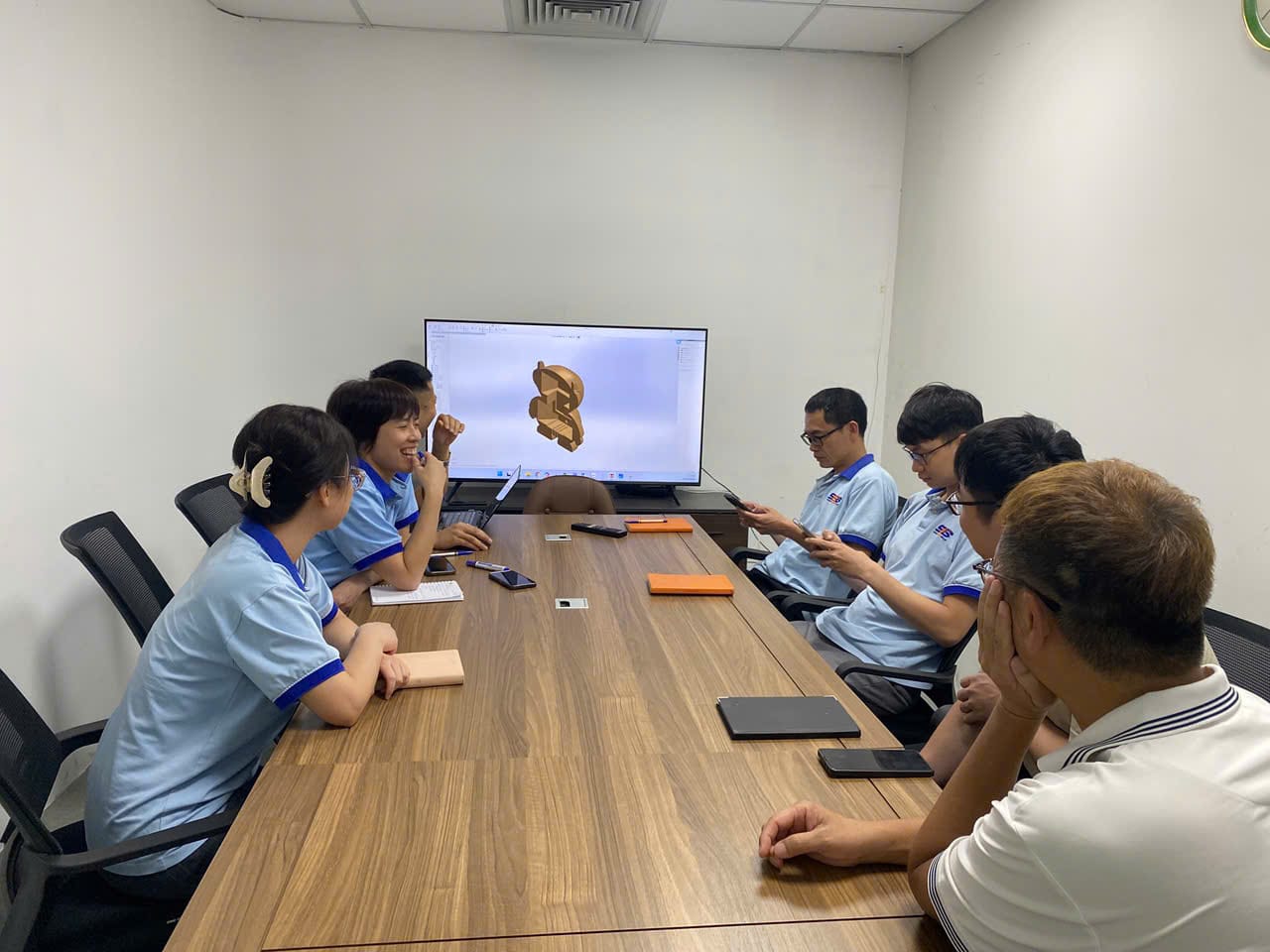
Step 3: Hold an internal meeting to agree on the survey focus.
After reviewing the documents, SaoMai Solution Group organized an internal meeting among relevant departments such as engineering, software, automation, implementation, or technical sales.
In this meeting, the following points are usually agreed upon:
Where are the customers' main problems?
Which stage should be surveyed first?
We need to carefully examine which systems are involved: machines, sensors, electrical cabinets, PLCs, monitors, I/O signals, local area networks, etc.
What further questions do we need to ask the customer to clarify the problem?
What additional angles need to be photographed, what processes need to be filmed, and what parameters need to be measured?
In other words, this is the step of transforming disparate pieces of information into a targeted survey plan.
Step 4: Identify the points that need to be inspected directly at the factory.
From the internal meeting, the team will clearly list the points that must be verified on-site. Typically, SaoMai Solution Group will focus on 5 main content groups.
Firstly, there's the actual operating situation.
In many cases, the procedures described in the documentation differ from the actual operation in the factory. Therefore, direct observation is essential.
Secondly, there are the faulty or manual processes.
These are often the areas with the highest potential for improvement. If a factory is relying on manual inspection, handwritten records, or personal experience, the likelihood of errors is very high.
Thirdly, there's the data and how it's being generated.
Where does the data come from? Does it go through a PLC? Is it displayed on an HMI? Is it saved to a computer or is it still being recorded manually? This is a crucial factor in determining the final solution.
Fourthly, there are system integration requirements.
For example: where to install the equipment, whether there is enough space, what is the power supply, is the signal available, what PLC is being used, and can it be connected to the existing system.
The fifth factor is the human element and coordination process.
Who is in charge of that stage, who is operating it, who verifies the data, and who will coordinate if it is implemented? A good solution must be suitable for how the factory is currently operating, not just technically correct.
Step 5: Prepare the survey checklist and assign roles.
An effective survey is incomplete without a checklist. After the meeting, SaoMai Solution Group usually prepares a checklist of items to be recorded beforehand, such as:
machinery information
operating procedure
installation location
relevant drawings or diagrams
PLC information, electrical cabinets, signals
Current status of input and output data
An anomaly is occurring on the production line.
Photos, videos, and documents need to be collected at the scene.
Alongside that, specific roles were assigned to each member:
The person asked and clarified the process.
field observer
person in charge of electrical and control inspection
data recorder, image recorder, video recorder
person who synthesizes the problem and preliminary solutions
When everyone knows where to focus their attention, the survey will avoid overlapping or missing information.
Step 6: Set clear objectives for the field survey.
Before visiting the factory, SaoMai Solution Group not only prepares a list of questions but also clearly defines the desired outcomes of the survey. For example:
The root cause of the problem has been identified.
assess the feasibility of the solution.
Identifying a suitable integration solution
Knowing what additional data needs to be collected after the survey.
There is sufficient basis to develop a technical proposal and implementation roadmap.
Defining the outputs from the outset helps keep the survey on track and saves time for both parties.
Step 7: Synthesize the survey findings to develop a suitable solution.
The pre-survey meeting is inseparable from the post-survey step. In fact, with good preparation from the start, the SaoMai Solution Group team can synthesize information faster and more accurately after returning from the factory.
Based on the data collected, the implementation team will proceed as follows:
Comparison between the original documents and the actual situation
categorize problems by priority level.
Propose solutions in stages if needed.
Identify what can be done immediately and what requires further investment.
Develop a clear presentation plan with practical examples and a technical basis.
As a result, the proposed solution is not theoretical, but closely aligned with the actual operating conditions of the plant.
The difference lies in SaoMai Solution Group's approach to factory surveys.
Lorem ipsum dolor sit amet, consectetur adipisicing elit. Autem dolore, alias, numquam enim The key lies not in the "conducting the survey," but in how the survey is prepared and implemented. At SaoMai Solution Group, the survey is not seen as a general site visit, but as the first step in the solution design process.
This approach helps businesses receive more value:
shorten exchange time
Reduce the number of times you ask the same questions.
Identify the problem and focus on the key issues.
Increase the likelihood of proposing the right solution.
Minimize risks when entering the design and implementation phases.
For projects involving automation, digitization of production data, AI cameras, smart factories, MES, traceability, or integrated control solutions, thorough preparation before the survey is even more crucial.voluptate id quam harum ducimus cupiditate similique quisquam et deserunt, recusandae.
Conclude
A successful project doesn't usually begin with system installation, but rather with the implementation team correctly understanding the plant's needs. Therefore, the pre-survey meeting is a small step but plays a crucial role in the entire process.
For SaoMai Solution Group, this step connects customer requirements, the team's technical capabilities, and the actual conditions at the site. Thorough preparation before visiting the factory leads to a more efficient survey, more accurate proposed solutions, and a more solid foundation for subsequent project implementation.
If your business is preparing to upgrade its production line, automate processes, or build a data-driven manufacturing management system, proper surveying from the outset will significantly impact the overall project's effectiveness.
SAO MAI SOLUTIONS GROUP JOINT STOCK COMPANY
Address: 25 Nguyen Quoc Tri Street, Yen Hoa Ward, Hanoi
📞 Hotline EN-VN: 090 8184 188 /0869191169
Email: info@saomaisoft.com
Website: https://www.fasolutions.vn/
NEW ARICLE

Traceability System (TSS) – Accurate, Flexible, Comprehensive
Automated Picking and Sorting Machine System – Accurate, Flexible, High Speed
RFID Solutions for Factory 4.0 – Automated, Accurate, Transparent.

ABOUT SSG
SaoMai Solution Group Joint Stock Company has grown into one of the leading companies in exporting technology solutions to the Japanese and U.S. markets after more than 20 years of development since its establishment. We have built a strong brand and earned high recognition for our quality from customers and partners both domestically and internationally.
CONTACT
Address: 25 Nguyen Quoc Tri Street, Cau Giay District, Hanoi, Vietnam
Phone: +84 908 184 188
Fax: +84 908 184 188
Email: info@saomaisoft.com
PRODUCTS
EcoSave (Energy Saving System)
QC Gate (Quality Control Gate)
Traceability (Product Traceability System)
AI Camera (Process Monitoring & Security)
Smart Box (Intelligent Storage System)
MES (Manufacturing Execution System – Data Collection & Management)
Automatic Pick-and-Place and Sorting System
RFID Warehouse Management Solution for Smart Factory
ABOUT US
SaoMai Solution Group is a leading provider of Smart Factory, automation, and software solutions with over 20 years of experience serving global manufacturing industries.